• Your Trusted 24 Hours Service Provider!

Category Archives: Trench & Tunnel

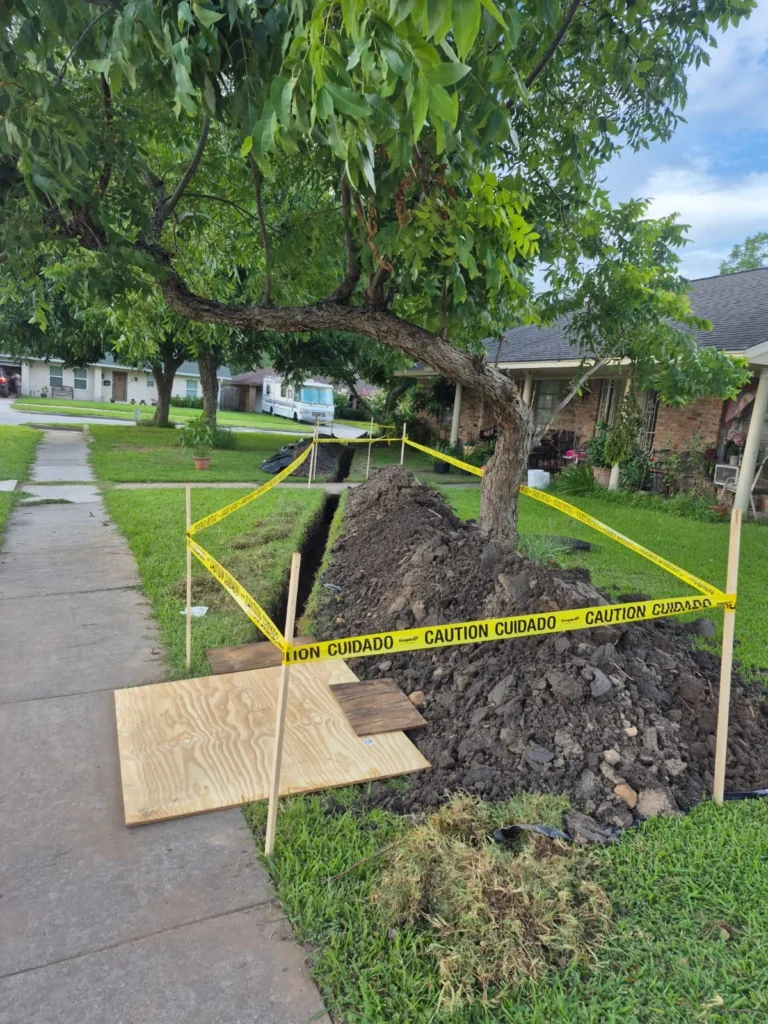
Trenching Contractors Near Me

Searching for trenching contractors near me is not just about finding a company with the right equipment; it’s about finding a reliable contractor to complete your project as promised, on schedule, and with no surprises. At United Rentals, we understand that trenching is the backbone of many construction and utility projects. A single mistake made below ground has the potential to create significant time delays, place employees at risk for injury, and result in expensive repairs. United Rentals provides an error-free, safe, and clearly communicated service.

Find the Best Trenching Contractors Near Me: Your Local Guide

When searching for trench contractors, it is important to find one who understands your specific needs. Selecting a contractor who understands the soil conditions, municipal rules, and underground utility locations will help you select the right contractor to perform the job correctly.

United Rentals has been serving Houston and the surrounding area since its inception, working closely with residential and commercial customers, as well as collaborating with other local Construction companies to ensure the seamless integration of our services into theirs and vice versa.

We offer the best trenching service in Houston for various types of projects, including:

  • Residential and Commercial Trenching in the Houston Area
  • Water, Sewer, Electricity, and Gas Utility Trenching
  • Block Wall Support Work
  • Custom Trenching Solutions For Tight Or Unique Job Sites

Choosing United Rentals will save you time and money looking for trenching contractors near me or Residential trenching contractors near me in Houston. With our local presence, we are able to respond to your needs promptly and accurately plan your job to meet the Building Codes in Houston.

Trenching Contractors Near Me

How to Compare Prices for Trenching Services Near You

While price is a critical factor in choosing a trench contractor, it should not be the only consideration when you’re look for a trenching contractor near me.

The price to excavate a trench can differ based on:

  • Trench depth and width.
  • Soil and ground conditions.
  • Type of trench (utility, foundation, drainage, etc.)
  • Access to the worksite.
  • Permit and safety requirements.

Some of the small trenching contractors near me may have some very low-priced rates, but many may not have the right equipment or insurance. United Rentals is a reputable company that offers honest pricing, so there are no additional or hidden fees. Our objective is not to provide short-term savings but to provide value over the long term.

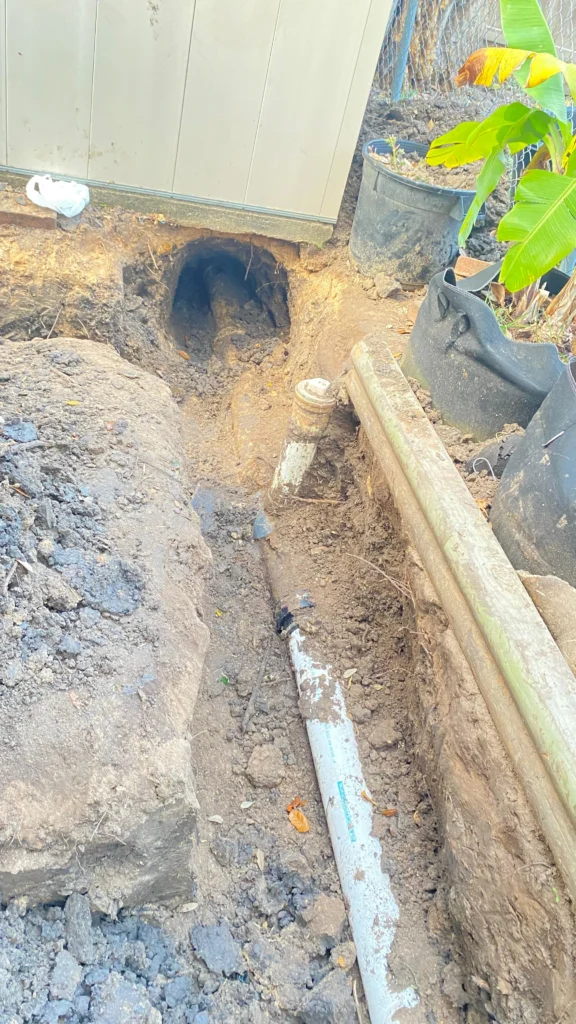
Sewer Line Replacement in Houston

Get Free Quotes from Trusted Trenching Contractors in Houston

The best way to begin your search for a residential excavation company near me or commercial trenching contractor is to receive a quote from as many different companies as possible, including United Rentals, which will provide you with a free and non-binding estimate specifically for your project.

During the quoting process, we evaluate the following items:

  • The size and duration of the project.
  • What types of trenches need to be installed.
  • What safety procedures must be implemented when working around utilities.
  • How much equipment and labor will be required to complete the trenching work.

In addition to providing you with a quote for your project, we also have extensive experience in both trenching and excavating. If you are not sure how to distinguish between excavating and trenching, we can help you find the most cost-effective method between excavation vs trenching to complete your project.

Save your time looking for trenching contractors near me and trust United Rentals because we guarantee:

  • Quick Scheduling.
  • Affordable Prices.
  • Licensed & Insured Professionals.
  • Residential & Commercial Trenching Services.

Whether you are looking for a complete utility trench, or just need help with your underground construction companies near me needs, United Rentals have you covered!

Conclusion

Experience and regional insight play a key role in locating trustworthy and looking for trenching or blockwall contractors near me within close proximity. United Rentals adopts a customer-centric approach while providing high-quality service through our state-of-the-art equipment and expertise of our skilled operators throughout Houston. No matter how big or small your residential project may be or a huge commercial underground utility installation may be. We are a trusted partner you can trust with digging foundation trenches properly the first time around!

Trenching FAQs

Is trenching the same as excavation?

No, while excavation and trenching are related, they mean different things. Essentially, excavation will typically consist of larger removal of topsoil across a wider area, whereas trenching will consist of narrower and deeper excavation for utilities, foundation support, and drainage.

What does excavation cost per hour?

Excavation costs per hour depend on the size of the equipment, the amount of labor, and site conditions. In Houston, rates tend to fluctuate based on the complexity of the job being performed, as well as the requirement for utilizing specialized trenching equipment.

What factors increase the price of a trenching project?

Many variables that can increase the cost of trenching services. These include rocky soils, deeper trenches, dense utilities, limited access, permits that need to be acquired, and an emergency time frame. To avoid any unexpected additional expenditures, it’s best to find an experienced excavation contractor.

Average Trenching Cost: Affordable and Reliable Trenching Services in Houston

The average trenching cost ranges from $500 to $1200 for 100′ of underground electrical conduit or water, sewer, or gas lines. Whether you are building a new home, upgrading utilities, or responding to drainage issues, the cost can have a major impact on your overall cost, efficiency, and safety. Trenching requires accurate measurements, careful planning, knowledge of the soil type and the utilities that will be installed. This article aims to help you understand how much it will cost to trench and backfill and how to find a quality, low-cost trenching service in Houston.

Average Cost Of Trenching And Backfilling in Houston

Homeowners & businesses often want to know “How Much Will This Be?” when digging trenches for sewer line installations.

For Residential projects, the current minimum average cost (before taxes, etc.) for Standard Trenching Backfill in Houston is $5-$12 per linear foot. This average trenching cost encompasses the total cost of excavation, labor, backfilling & basic surface restoration.

Example of Trenching And Backfilling Rates:

  • The backhoe trenching cost per foot: $20-$40 per linear foot, depending on the soil type & accessibility.
  • Manually Hand Dug Trenching: Manual Trenching is typically $30-$50 per linear foot due to the labor-intensive nature of the method.

While hand trenching may seem like an expensive option, it’s sometimes a necessity due accessibility restrictions & where accuracy is important (e.g. narrow utility corridors).

Cost to dig a trench by project

The average trenching cost can vary greatly based on the nature of the project, the soil conditions, and the reason for the project. Below are some examples of what trenching costs typically look like for different types of projects.

Residential Sewer Line Trench:

The average cost to dig a trench per foot by hand for a sewer line is typically between $1,500 and $3,500 for the average property. Complex layouts or very rocky soil types will result in higher costs associated with this project type.

Utility Trenching:

The typical costs for installation of electric, gas, and water lines are calculated by the length of the trench in feet. The average cost to trench electric line per foot will be between $15 and $35. Utility trenching also frequently requires permits, additional safety measures (i.e., fencing), and careful planning.

Drainage Trenches:

The cost to trench for drainage includes the depth, width, and materials of the drain. Homeowners often ask: “How much does it cost to dig a trench for drainage?”. The general range of prices to dig a drainage trench is $10-$25 a linear foot. If a retaining wall or concrete reinforcement is required, the cost may be slightly higher.

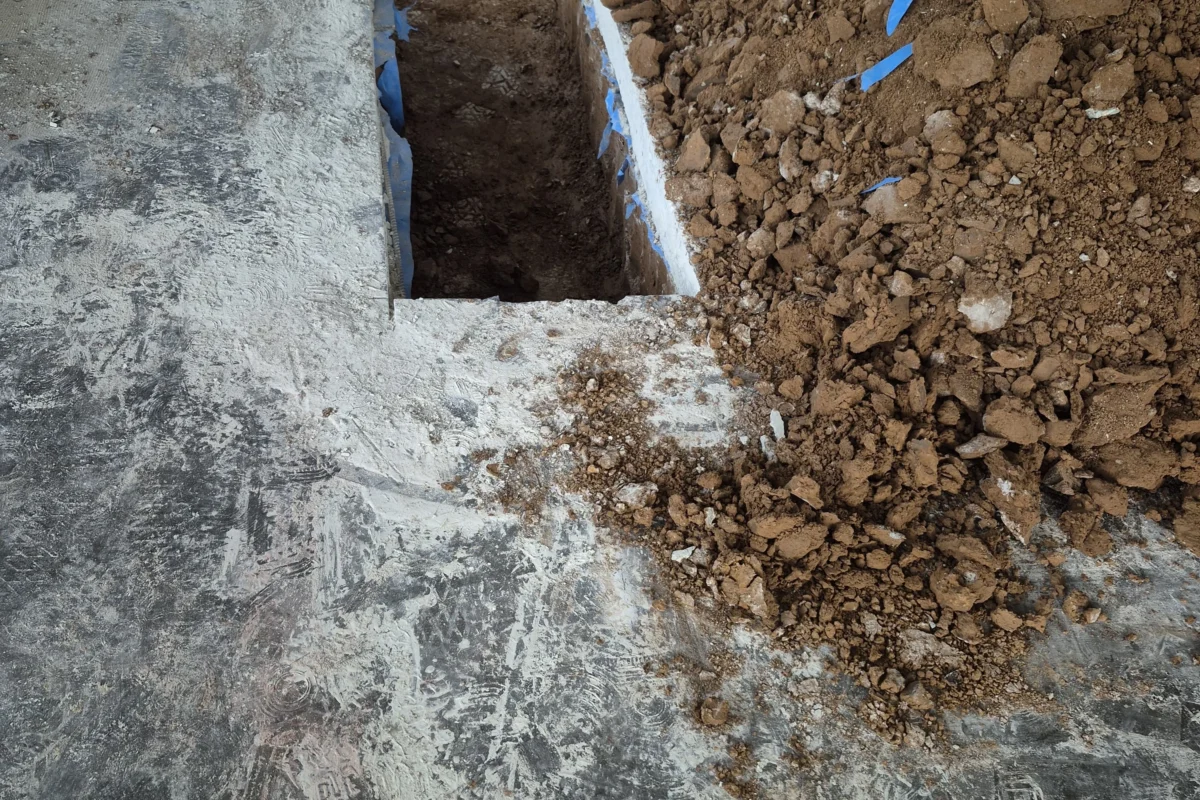
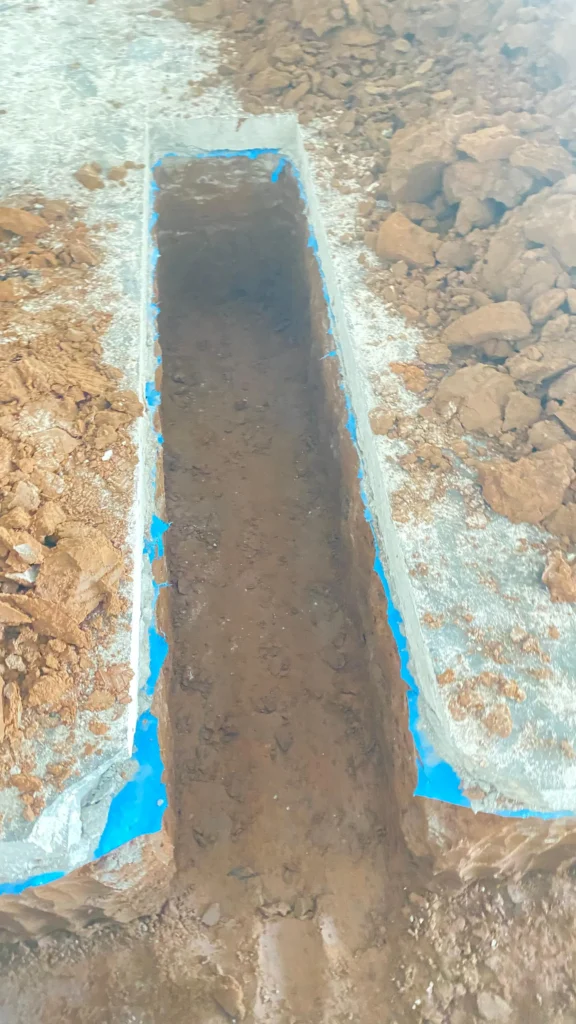
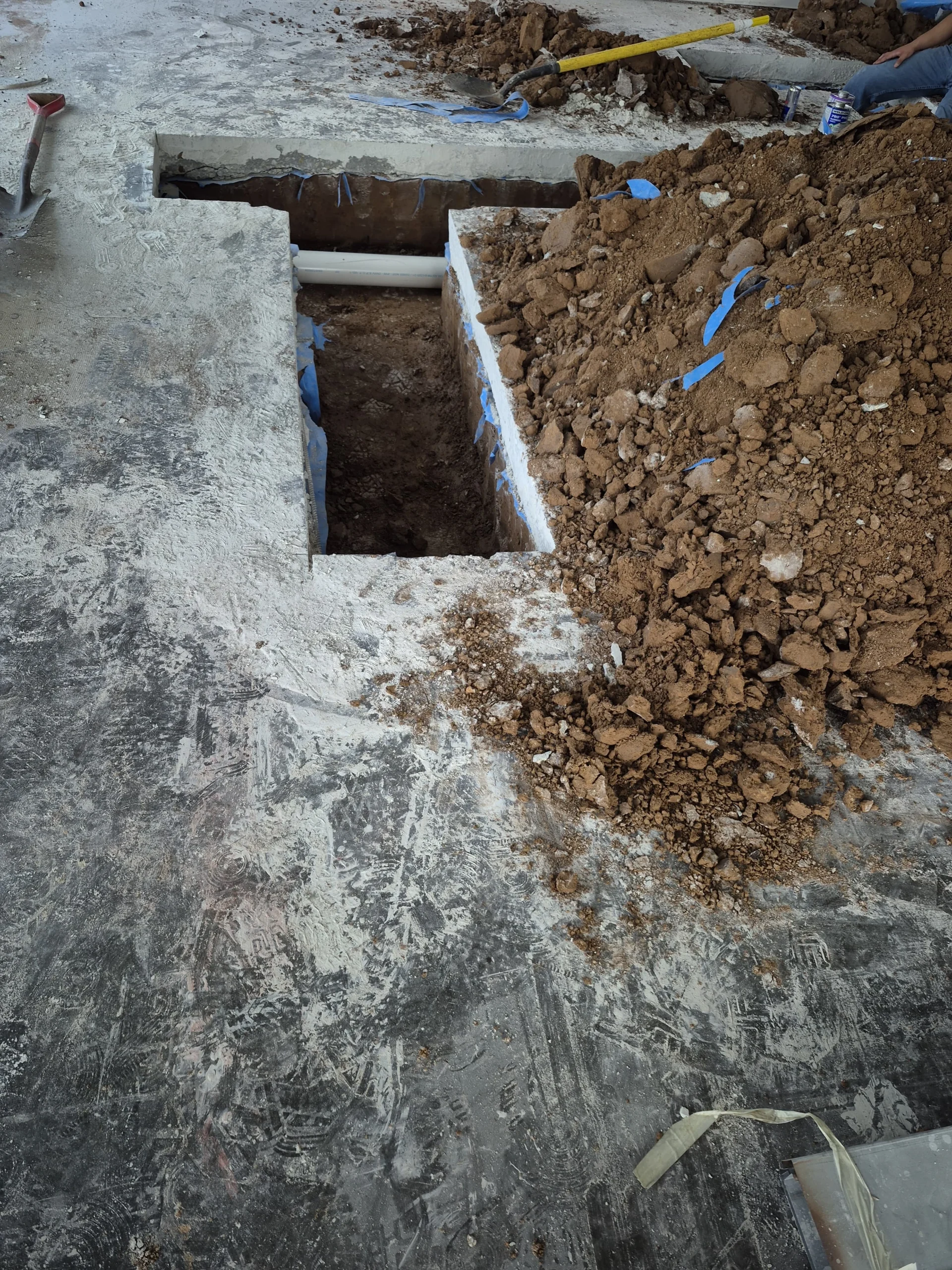
Concrete Slab Trenches:

The labor required to cut a trench through an existing concrete slab makes this a much more intensive labor project, with the cost to trench concrete slab ranging between $30-$60 per linear foot. These prices include the costs to cut through the concrete; excavate; and backfill with soil or gravel.

Underground conduit installation cost per foot

The average trenching cost for utilities (electric, communication and water) will be impacted by the installation of below-ground conduit, with the per-foot cost for installing a conduit typically ranging from $20-$50. The installation costs of the conduit will vary based on the depth of the trench, the type of conduit being installed and the type of terrain.

United Trenching Services provides precision trenching and conduit installation to make sure you have a compliant, safe and future-ready installation of your utilities.

Average Trenching Cost in houston

Factors That Affect The Trenching Cost

When estimating the average trenching cost, the following factors all play a major role as well:

Types of Trenches:

A simple, straight trench is going to be less expensive than a trench, which has several curves, has steep grades, or contains a variety of depths. Specialized trenches are going to require more man-hours and knowledge add to the costs of digging them. Examples of specialized trenches are foundation and utility trenches.

Type and Condition of the Soil:

Soil that is sandy or not compacted is relatively easy and inexpensive to excavate. Conversely, rocky and clay-rich soils require additional manpower and equipment to excavate. Excavating through a saturated or a compacted soil condition would also require additional labor and equipment.

Depth and Width of Trench:

The deeper or wider a trench, the more it will be to excavate. Sewer line trenches require a minimum depth of 3 – 5 ft, increasing their overall cost as compared with shallow drainage trenches.

Equipment Utilized:

The cost of employing labor to dig manually is going to be more expensive than utilizing heavy machinery (i.e., Backhoe & Trencher), the presence of which will drastically reduce the time expended to complete a trench, thus lowering the total average trenching cost.

Accessing Property:

The more difficult and costly it is to access your property due to distant location from the street, the cost for trenching will increase (i.e., Required to obtain Street Permits, Obstructive Tree Removal, etc.).

Backfilling and Restoring:

The costs of backfilling the trench, along with the cost of compacting the soil back to pre-excavation conditions, along with restoring Landscape or Pavement, are costs that will be incurred at the end of any trenching project, and restoration failure could incur additional future costs of repairing the damage.

By taking into account the above factors, you can maximize your project planning time, avoid unexpected cost increases at the end of the project from change orders, and ensure the best possible pricing on any trenching work required for your project.

Average Trenching Cost in houston tx

Finding Affordable Trenching Services Without Compromising Quality with Trenching Service

Choosing the most affordable average trenching cost available may entice you when choosing a Trenching service in Houston to perform work. However, cutting corners within trenching can have an adverse effect on your project’s overall success and result in additional (and expensive) mistakes. An improperly excavated trench could collapse, harm existing utility lines, or cause you to fail your inspection process. To ensure that you achieve the right balance when selecting a Trenching Service consider following these guidelines:

  1. Get Multiple Quotes.
  2. Evaluate the Experience and Equipment of the Contractor.
  3. Review Customer Feedback and References.
  4. Inquire About Permit Management.

United Trenching Services has incredibly transparent pricing, highly experienced crews, and a variety of high-efficiency Trenching Equipment to assist in all types of Trenching Projects from Digging Foundation Trenches to Utility Trenches and much more. We do everything possible to provide excellent service while offering affordable pricing.

Conclusion

There are many different ways to trench for sewer lines and variously-sized utility lines; however they all share the same basic characteristics: they are important, require accuracy, and involve expense. The average trenching cost can vary widely depending on how it is done, what kind of soil you are using to dig the trench, and the amount of material being removed from the trench; therefore, it is important to select an experienced and credible company for utility trenching, foundation trenching, and excavation vs trenching.

At United Trenching Services, we provide professional-grade, customized utility trenching solutions that are based on your project specifications.

Trenching FAQs

How much does trenching cost per metre?

The trenching cost per meter in Houston can vary widely according to the depth and width of the trench and the type of soil, but the cost is typically between $30 and $60 per linear metre of trench.

How long does it take to trench 100 feet?

When excavating 100 feet of trench using backhoes, the average completion time is 1-2 days. If done manually, expect 3-5 days to excavate this amount, depending on the size of the trench and soil conditions.

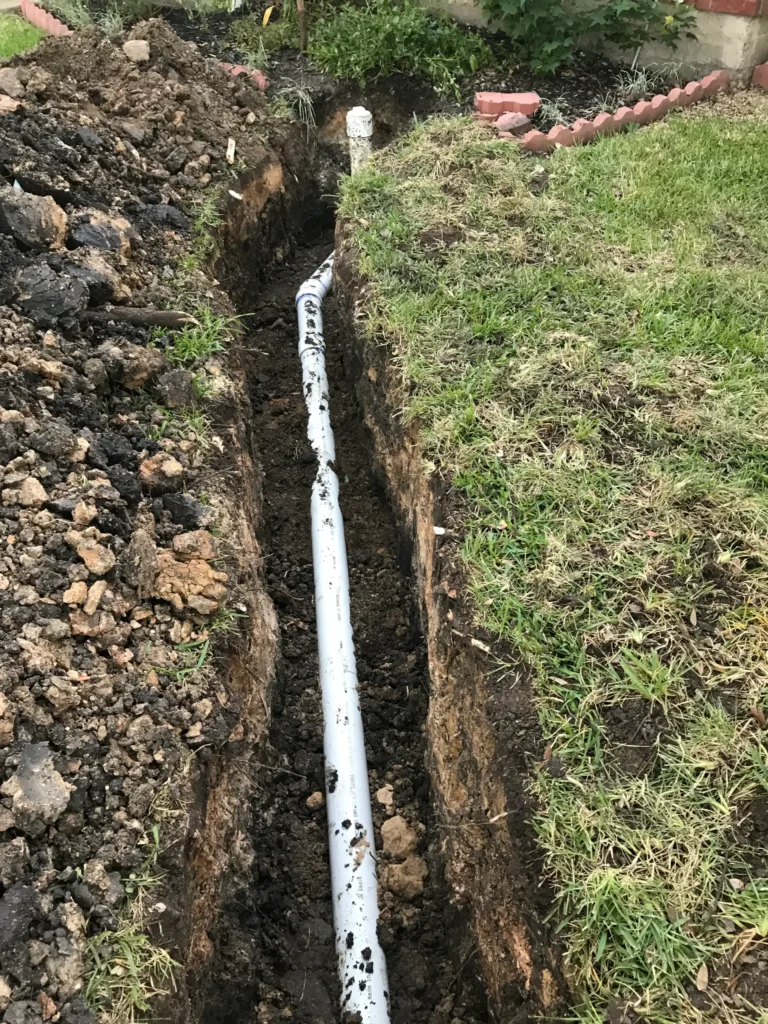
Digging Trench for Sewer Line

Digging trench for sewer line might seem easy, however the trenching process is an integral part of all plumbing & infrastructure projects. A poorly constructed sewer line trench can cause numerous problems including improper drainage, damage to the pipe, building code violations and even costly repair work down the road. Therefore, if you are installing a new sewer system or replacing an old one as part of a residential or commercial construction project, understanding the process of trenching will help you make better decisions.

digging trench for sewer line

How to Dig a Trench for Sewer Line

The process of digging trenches involves excavation of a trench that has been engineered to a specific slope and depth so that sewer piping can be installed at those specified locations without worrying about it collapsing on top of them. Many homeowners may think they can complete digging trench for sewer line and creating their own sewer line trench on their own; however, it is important to note that many times it takes a professional to perform the excavation and installation of the sewer line due to the specific requirements of excavation.

Here’s a simplified overview of the best way to dig a trench for sewer line, from planning to pipe installation:

Step 1: Plan the Sewer Route

Before starting to dig, sewer contractors will determine the most practical method to connect your home to your city or septic tank by mapping the best path to avoid disrupting anything underneath the earth, such as electrical wiring, water lines, and digging foundation trenches.

Step 2: Mark Utilities and Boundaries

Do not make arbitrary digs in any area. Always have your utility company mark your underground facilities (gas, electric, phone, etc.) before starting a dig on your property, especially when beginning digging trench for electrical cable in close proximity to existing ones.

Step 3: Determine Proper Depth and Slope

How deep should my sewer line be? Most residential sewer lines are dug at a depth of 3-6 feet depending on your local frost line and city codes. In addition, your sewer line must be sloped downward consistently for proper drainage.

Step 4: Start Excavation

In comparing excavation vs trenching, it is important to know the difference. Excavation means removing large amounts of dirt from an area, while trenching-in terms of installing a sewer line-is concerned with making narrow and controlled cuts to allow for the installation of the sewer line and, in some cases, a clean-out access point. A trench could either be dug using a specialized trencher or excavator.

Step 5: Prepare a Stable Base for Your Sewer Pipe

This is often the step in digging trench for sewer line that is overlooked by DIY’ers. A sand or gravel base is a vital step for keeping your sewer pipe from shifting once it has been installed. 

Step 6: Install the Sewer Pipe

Once the sewer pipe has been installed, it should also be checked to make sure that it is properly aligned and securely connected. If either of these processes are skipped or not completed correctly, then it can lead to leaks in the future.

Step 7: Backfill and Compact Your Trench after Inspection Approval

Once your trench has been approved by the municipality, you can now backfill this hole and compact it to ensure that the ground has been restored to its original condition.

Hiring a professional like United Rentals for digging trench for sewer line will save you time, money, and unnecessary risk and also guarantee that the system will be built to last.

How Much Does Digging a Trench for Sewer Line Really Cost?

The cost to trench sewer line is a major concern for almost every homeowner; it can vary greatly depending on several factors, including:

  • The total length and depth of the trench.
  • The soil condition where the work will be completed (rocky soil can increase costs).
  • The accessibility of the site location (hard-to-access locations typically cost more to trench).
  • Any associated permit/inspection fees.
  • If any old sewer lines need to be pulled out before the new lines are installed.

The average cost to dig a trench for a sewer line ranges from $950 per 100 linear feet. Even though digging trench for sewer line will save you money in the short run, many DIY projects that have gone wrong end up costing you much more in the long run. A qualified professional will be able to do the work correctly the first time, avoiding future problems that may arise if you attempt to do it yourself.

United Rentals will provide you with an accurate price and estimate based on your project, so you can be confident that what you are paying for is exactly what is required. You won’t have any surprises or short cuts with our services.

Essential Tools Needed for Digging a Sewer Trench Efficiently

Trenching sewer line should not be done with just a shovel. The most common tools used by professionals typically include the following:

  • Trenchers & Mini Excavators.
  • Laser Levels to Ensure Proper Slope.
  • Compactors for Backfilling.
  • Protective Shoring Systems.
  • Measuring/Marking Tools.

If you do not have access to any type of equipment specifically designed for trenching, your digging trench for sewer line project will likely be time-consuming and unsafe; in addition, you run the risk of making major errors, resulting in unnecessary costs.

Understanding Regulations and Permits for Digging a Sewer Trench Near You

City regulations mandate passing inspections before filling trenches for sewer line excavations for public safety and to provide support for city infrastructure. These regulations require a permit prior to excavation to specify:

  • required trench depth.
  • synthetic pipe materials that can be used.
  • distance that a sewer line can be placed from other utilities.
  • safety measures must be utilized during the installation of open trenches.

Through hiring a qualified contractor like United Rentals, you can avoid issues with your project. We will take care of all necessary bid documentation and code compliance requirements as set forth by local code officials.

Safety Precautions To Consider When Digging Sewer Trench

Sewer trenching Safety is an absolute priority when digging trench for sewer line. A very real threat from trench collapses, utility hits, and accidents involving tools and equipment. There are several important safety precautions to take into account when trenching for sewers:

  • Correctly shoring the trench.
  • Wearing protective garments.
  • Maintaining dry and stable trench conditions.
  • Clearly marking and delineating your work zones.

This is just one of the reasons that using a specialized crew trained specifically for sewer trenching is critical to performing a successful sewer line installation.

United Rentals is responsible for obtaining all the necessary permits and adhering to the local and state regulations regarding your sewer trenching project so that you can feel at ease knowing your project will comply with all regulations.

How to Choose the Right Contractor for Sewer Line Trench Digging

When selecting the ideal contractor for digging trench for sewer line, you need to choose experience and professionalism. At United Rentals, our experience and expertise allow us to provide quality sewer line excavation and trenching, resulting in high-quality, reliable, and compliant installations. We want you to have a complete understanding of the process, along with associated costs, tools, safety considerations, and tips for selecting a contractor. Here’s why you should choose us:

  • Experienced in sewer line excavation and understands excavation versus trenching methods Proper training, licensing and insurance. 
  • Reasonable pricing and timelines.
  • Professionalism in finding sewage line trenching solutions. 

At Trenching service, we use both modern equipment and practical experience to provide a consistent safety record for our clients and follow local laws and regulations while keeping projects running on time. What makes United Rentals different from other trenching companies is our commitment to technical excellence while providing superior customer service. We do more than just dig the trenches; we provide our clients with peace of mind.

Conclusion

Trenching for a sewer installation is more than just taking out dirt; it’s about digging everything in an accurate, safe manner, so that the sewer will work properly for many years to come. When you’re digging trench for sewer line, knowing how far down to go, getting the proper permits and being aware of the cost will keep you from running into issues later on. There are many ways to accomplish the job yourself, but if you’re looking for an efficient and reliable way to get the job done correctly, then hiring United Rentals will give you peace of mind.

Frequently Asked Questions About Digging a Trench for Sewer Line

What is sewer line excavation?

Excavating a vertical hole in the ground to replace, fix or install an underground sewer pipe is called a sewer line excavation. A sewer line excavation entails digging a trench according to the depth, slope, and safe distance from neighbouring utilities.

How deep is a sewer line trench?

Most sewer line trenches are typically dug to be from 3 feet to 6 feet deep based on local code requirements, frost lines, and/or the location of the property. The proper depth enables proper drainage and provides long-term durability.

Benching System Excavation

For excavation projects regardless of the type safety and stability of the soils should always be considered. The benching system excavation method is a valuable excavation technique that helps reduce risk for workers by providing easier access to deeper trenching and safer excavations while allowing for compliance and control of work site activities. Unfortunately, many are not overly familiar with how the benching system works or when it’s beneficial. Therefore, we would like to use this guide to explain the benching method, to outline its major regulatory requirements, and to highlight some of the common concerns regarding safety.

What is Benching in Excavation?

A benching system excavation is a method of constructing horizontal step-like formations (benches) into the walls of an excavation or trenching site to create a safer working environment for the workers and equipment used on that project. Rather than excavating the excavation straight down, the side walls of the excavation are shaped using a series of steps, which allow for reduced soil pressure on the walls of the excavation trench, which decreases the potential for a cave-in.

The primary purpose of benching is to stabilize the side walls of an excavation and provide a safe surface for workers and equipment to access the excavation. This system is the most effective when used in cohesive soils because of the ability for the soil to keep its shape as a result of the bench construction. Benching systems can generally be broken down into two categories: simple benching system excavation and multiple benching.

  • Simple benching is meant to create horizontal benches that are all of the same height and width. Simple benching systems are most commonly found in excavations that are shallow.
  • Multiple benching systems feature benching systems that are built with several horizontal levels stacked on top of one another. Multiple benching systems are advantageous for deeper excavations, where the additional number of benches creates a greater soil support.

With the use of the proper benching system, it is imperative that any project must comply with the benching excavation maximum height, which is dictated by the type of soil in which the project is occurring and the applicable OSHA regulations. Project managers need to be mindful of the maximum height limits of bench excavations because exceeding those limits creates a risk of structural failure and will require the professional planning of the project.

Common Safety Tips for Benching in Excavation

When benching system excavation is used to re-shape the existing surface, all planning and implementation activities must take into account the safe use of benching. The following are some very important safety measures to be taken when implementing benching in excavation:

  1. Understand Soil Classifications:

Prior to benching, testing/classification of soil must be done; as defined by OSHA, soil types are indicated as follows:

  • Type A: Most stable.
  • Type B: Medium stable.
  • Type C: least stable (prohibiting use in benching).

Some soils will inherently be unsatisfactory in providing the necessary support for a benching system excavation, such as; Saturated, Granular. Therefore, alternative methods for excavation shall be employed, i.e., slope and/or shore (support).

  1. Follow Proper Bench Dimensions:

All domestic benches require a minimum of 2 OSHA-approved width-to-height ratios and the width/height ratios may vary; therefore, accuracy in both dimensions is extremely critical for maintaining the structural integrity of the bench system.

  1. Keep Spoil Piles Away from the Edge:

All spoil piles should be located at least a minimum safe distance away from the edge of the excavation. All loose tools and loose & heavy machinery/equipment should also be at a safe distance (greater than minimum distance) from the edge of an excavation due to the added weight that they impose on the edge of the excavation can create potential collapse situations.

  1. Inspect the Site Daily:

All excavation sites in a benching system excavation should be routinely inspected at a minimum of once a day, and

  • When workers are posted to work on the excavation.
  • When there are changes in the weather. 
  • Whenever there are additions or removals of equipment/workers on the excavation site
  • Whenever changes in the physical soil have been changed/altered.
  1. Reinforce Access and Egress:

All ladders/ramps must be located at least 25.0 feet (minimum) apart so that workers have quick access/egress from the trench if necessary and to ensure there are quick escape routes available in case of accidents/emergencies at the trench.

  1. Train Workers Thoroughly

Only trained personnel should operate excavation equipment and/or perform tasks in benched trenches.

All excavations that are following the aforementioned safety guidelines will provide an extremely high success rate of maintaining soil stability and protecting employees.

Comparing Benching and Sloping Methods: Which Excavation Technique Is Right for Your Project?

Both Sloping and Benching are common methods of protecting against soil failure, however, while they provide the same level of protection, they have unique characteristics that make them suitable for particular types of applications, costs and types of soils.

Benching System Excavation

  • Best for cohesive soils.
  • Ideal for deeper trenches requiring stable access.
  • Allows workers to move more easily within the excavation.
  • Requires more planning but provides structured stability.
  • May help reduce overall excavation footprint compared to sloping.

Sloping

Sloping involves cutting the trench walls at an angle away from the excavation. It’s simpler to implement but requires much more horizontal space.

Pros:

  • Easier and faster to execute.
  • Works well in many soil types, including granular soils.
  • No need for step-by-step bench measurements.

Cons:

  • Requires a larger work area.
  • Can increase project costs due to added excavation volume.

When to Select Sloping or Benching

The choice of which system to utilize depends on the:

  • Type of soil,
  • Area available for the project,
  • Depth of Excavation,
  • State and Local Regulations,
  • Available budget.

When there is limited space on a construction site, or the excavation is deeper than 4′, the use of a benching system excavation is often the better option. When there is ample open space, and the excavation on the jobsite is less than 4′, the Sloping System may be a better fit for the project.

Many construction companies employ a combination of both methods due to the varying safety and soil conditions for each section of the construction project.

Regulatory Guidelines for Benching Excavation

The United States Department of Labor’s (DOL) Occupational Safety and Health Administration (OSHA) governs the federal standards for excavation safety. The OSHA regulations outline the conditions necessary for using benches, the types of soil that can be used, and how to calculate the maximum bench height for your excavation activity.

Among the key items included in the OSHA regulations for benching system excavation safety are:

  1. Soil Type Limitations:

Benching Excavations in Type C Soil are prohibited. Type A and Type B soils can be used for benching with specific ratios and measurements.

  1. Bench Height & Width Requirements:

OSHA to maintain worker safety will restrict the maximum height of a bench, and the minimum width, depending on the type of soil used, and the overall slope ratio of the excavation.

Penalties can be imposed for not abiding by these standards, resulting in unsafe working conditions or even legal liability.

  1. Site Inspections:

All trench construction on a job must be inspected by a competent person, or an individual qualified by training and experience, to ensure that:

  • The trench is safe to work in;
  • No adjacent area is in danger of collapse or injury;
  • There is a hazard associated with the soil;
  • There are no hazards present in the atmosphere.

And changes in the soil may cause an unsafe working environment.

  1. Protective Systems for Workers:

Benching system excavation must be part of a complete protective system that is in compliance with the OSHA Subpart P standard.

Hiring professional trenching and benching services, you take the worry and uncertainty out of your project. These contractors have in-depth knowledge of OSHA excavation safety requirements and will ensure that your project adheres to these regulations.

Professional Benching Services in Houston

Precision, safety and compliance when it comes to the construction and utility landscape of Houston especially when it involves trenching for pipelines, drainage systems or foundation work. United Rentals’s professional benching services provided in Houston meet regional specific needs:

Expert Soil Classifications

We classify and evaluate soil to determine if the benching work can be accomplished safely under OSHA standards for soil safety.

Bench Design Customization

Bench Design customers receive an engineered benching design based on soil type, the depth of the trenches, and other environmental considerations related to the benching system excavation project requirements.

Compliance-Focused Cutback Executions

We will execute all cutbacks in compliance with the maximum trench height rule with regard to OSHA’s protective system and use of the Protective System Design for benching and bench constructed areas.

Trained Excavation Personnel

We employ a fully trained work crew to perform all work, using the latest equipment and safety protocols to construct strong, reliable benches.

Total Project Support

Our customers receive full service throughout the project, planning to before the benching, during, and following, with minimal disruption to the project process.

If your project’s success is dependent upon dependable, safe trench excavation work, then United Rentals are the trenching service you need for your project’s success and efficiency.

Conclusion

Among all methods of stabilizing trench walls using cohesive soils, the benching system excavation method offers superior safety and effectiveness than that offered by other techniques. Benching offers improved access to workers during the excavation process, along with better overall stability and support for structural integrity, both of which provide benefit to designs utilized for all types of excavation projects.

Being aware of the differences between benching and sloping systems for stabilizing trench walls, as well as understanding the requirements set forth by OSHA regulations, and knowing when to consult with professionals will impact the ultimate success of an excavation job.

With United Rentals professional benching services, clients will receive reliable, compliant, and project-ready excavation support in Houston.

Frequently Asked Questions About Benching System Excavation

What is the benching method of excavation?

Benching refers to a method of creating horizontal surfaces, known as “benches,” on excavation walls and an effective way to mitigate soil pressure and reduce the potential for collapse. This method allows for safe work access while permitting deeper excavation activities to proceed with desired support.

What is the purpose of a benching system?

The purpose of a benching approach is to stabilize the walls of the excavation, thereby increasing worker safety by decreasing the likelihood of worker injury due to collapsing walls. In addition, benching enhances access to the worksite, provides a more structurally sound wall, and increases the safety of an excavation site as a whole.

Sewer Line Excavation & Repair – Trusted Local Specialists

Introduction

Sewer line excavation is a crucial solution when underground pipes are severely damaged, collapsed, or beyond simple repair. At Sewer Line Excavation & Repair – Trusted Local Specialists, we provide expert digging, diagnosis, and restoration using proven methods tailored to your property’s needs.

Whether it’s a broken sewer line or a persistent drainage issue, our team ensures minimal disruption with precise trenching service in Houston.

We handle everything from permits to cleanup, so you don’t have to worry. If you’re dealing with recurring backups, foul odors, or soggy lawns, contact us today for fast, professional excavation and repair done right the first time.

Sewer Line Excavation services

Expert Sewer Line Excavation Services for Commercial Properties

Sewer line excavation is often the only solution for deep, hidden, or severely damaged sewer systems in commercial buildings. Whether you manage a restaurant, office park, retail space, or industrial facility, our team provides specialized sewer excavation with minimal disruption to your business operations. We bring years of experience, advanced equipment, and safety-first procedures to every job—ensuring reliable results and long-term performance.

Why Commercial Clients Choose Us:

  • Heavy-Duty Excavation Equipment: Designed to handle large-scale commercial jobs quickly and safely, reducing operational downtime.
  • Accurate Problem Diagnosis: We use advanced camera inspections to pinpoint damage before excavation, saving time and money.
  • Permits, Codes & Compliance: Our licensed professionals manage all necessary permits and ensure compliance with Houston’s local building codes.
  • Transparent Pricing: We provide itemized quotes for both sewer line excavation cost and excavation sewer line repair cost, so you know exactly what you’re paying for.
  • Full Restoration Services: After excavation and repair, we restore surfaces (concrete, asphalt, landscaping) to their original condition.
  • 24/7 Emergency Availability: When sewer emergencies strike, we respond fast—day or night—to protect your property and reputation.

Need professional trenching service in Houston for your business? We’re your go-to team for reliable, cost-effective sewer line excavation and repair. Call now to schedule an on-site consultation.

Signs You Need Sewer Line Excavation: A Guide for Property Managers

Sewer line issues can escalate quickly, leading to property damage, health hazards, and costly repairs. For property managers, knowing when sewer line excavation is necessary can save time, money, and tenant complaints. Acting early helps avoid major disruptions and ensures system reliability.

Key Warning Signs to Watch For:

  • Persistent Drain Backups: Frequent clogs or slow drains in multiple units may indicate a deep sewer line issue requiring excavation.
  • Foul Odors Indoors or Outside: Sewage smells around the property or inside buildings suggest a possible break or blockage underground.
  • Unusual Lawn Patches: Extra-green or soggy areas in landscaped zones can mean a leaking sewer line that needs urgent attention.
  • Cracked Pavement or Foundation Shifts: Long-term sewer leaks can erode soil, destabilizing walkways, driveways, or building foundations.
  • High Water Bills with No Clear Cause: Undetected leaks in the sewer system may not show indoors but can drive up costs rapidly.
  • Failed Drain Cleaning Attempts: If snaking or hydro-jetting doesn’t resolve recurring issues, trenchless sewer line replacement or full excavation may be the next step.

Understanding the problem early helps you plan smarter. We’ll explain your options clearly is possible and what the trenchless sewer line replacement cost could be—so you can act with confidence.

Choosing the Right Sewer Line Excavation Company for Your Commercial Building

Sewer line excavation for commercial properties is a complex job that requires specialized skills, proper equipment, and a deep understanding of local codes. Choosing the right company can mean the difference between a smooth, efficient project and costly disruptions. Property owners and facility managers should look beyond just pricing—experience, reliability, and service scope matter.

While many companies focus on residential sewer line repair, commercial systems demand a higher level of expertise due to their size, usage, and accessibility challenges.

What to Look for in a Commercial Excavation Partner:

  1. Licensed & Insured Teams: Confirm certifications, insurance coverage, and compliance with all Houston and state regulations.
  2. Advanced Diagnostic Tools: Look for companies using camera inspections, line locators, and soil analysis for precise planning before digging.
  3. Full-Service Capabilities: A reputable provider should offer both excavation and trenchless options, including replacement, restoration, and follow-up maintenance.
  4. Transparent Estimates & Timelines: Clear communication on pricing, timelines, and scope—no hidden fees or vague commitments.
  5. Emergency & After-Hours Support: Sewer issues don’t follow business hours. Choose a team that can respond quickly when emergencies strike.

Choosing wisely ensures fewer delays, better outcomes, and peace of mind. Make sure your excavation partner understands the unique demands of commercial properties.

Sewer Line Excavation services

The Complete Process of Commercial Sewer Line Excavation Explained

Sewer line excavation for commercial properties is a detailed, multi-step process that involves more than just digging a trench. From diagnosis to full system restoration, it requires careful planning, specialized equipment, and coordination with local authorities. Whether you’re searching for sewer line replacement or exploring options beyond residential sewer line repair, understanding the process helps you make informed decisions and avoid costly setbacks.

Step-by-Step Breakdown of the Excavation Process:

  1. Initial Inspection & Diagnosis: Using video cameras and line locators, the damaged section is pinpointed to determine 
  2. Whether excavation or trenching service in Houston is needed.
  3. Permit Acquisition & Utility Marking: The contractor secures city permits and coordinates with utility companies to mark gas, water, and power lines before excavation begins.
  4. Excavation & Site Preparation: Heavy-duty equipment is used to carefully expose the affected sewer line without damaging nearby structures, foundations, or landscaping.
  5. Pipe Removal & Repair: The damaged or collapsed pipe is removed and replaced with new materials, ensuring long-term durability and compliance with code.
  6. System Testing: The new sewer line is pressure-tested and inspected to verify proper installation and function.
  7. Backfilling & Site Restoration: Soil is compacted in layers, and any affected pavement, concrete, or green space is professionally restored.
  8. Final Walkthrough & Documentation: A complete report is provided, including photos, compliance details, and warranty information for peace of mind.

Whether you’re searching for sewer line replacement near me, a reliable trenching service in Houston, or just comparing to residential sewer line repair near me, trust a commercial excavation team that gets the job done right—start to finish.

Cost Factors to Consider for Commercial Sewer Line Excavation Projects

Sewer line excavation for commercial buildings is a significant investment, with pricing influenced by multiple technical and site-specific factors. Whether you’re exploring full Subsurface sewer line digging or alternative methods like a sewer pipe repair sleeve, understanding the cost drivers helps you plan smarter and avoid surprises.

Key Cost Factors in Commercial Sewer Excavation:

  • Depth and Accessibility of the Sewer Line: Deeper lines or hard-to-reach areas (under foundations or tight spaces) can increase excavation costs to $250–$500 per linear foot.
  • Scope of Damage:  A minor crack may be sealed with a sewer pipe repair, which costs $1,000–$3,000 per section, while collapsed lines typically require full excavation and replacement.
  • Excavation Method Used: Traditional excavation: $5,000–$25,000 for commercial jobs, depending on length and complexity.
  • Trenchless methods: More upfront (up to $200–$250 per foot), but lower surface restoration costs.
  • Site Conditions: Excavation under parking lots, landscaping, or sidewalks may add $2,000–$10,000+ for removal and full surface restoration.
  • Permits and Code Compliance: Expect $500–$2,500 in local permit fees, inspection charges, and code compliance costs in cities like Houston.
  • Pipe Material and Length: PVC or ABS: $50–$150 per foot installed.
  • Cast iron or HDPE: $100–$200 per foot.
  • Total costs rise with longer or upgraded pipe systems.
  • Restoration and Surface Repair: Final costs for concrete, asphalt, or landscaping replacement range from $2,000–$8,000+, depending on the extent of disruption.

On average, full underground sewer line excavation for a commercial building may cost $10,000–$50,000 or more, while targeted repairs with a sewer pipe repair offer a lower-cost option when appropriate.

Always request a detailed, itemized estimate to ensure you’re paying for exactly what your property needs—nothing more, nothing less.

Emergency Sewer Line Excavation Services for Commercial Clients

When a sewer line fails unexpectedly, time is critical—especially for commercial buildings where delays can mean lost revenue, health risks, or code violations. Our emergency sewer line excavation services are designed to respond fast, work efficiently, and restore flow with minimal disruption to your operations. Whether you manage a retail space, office complex, or industrial facility, our team is ready 24/7 to handle urgent sewer line issues.

If you’re searching for sewer line excavation near me or need a trusted sewer line excavation service near me, we’re equipped to act immediately and resolve the problem right.

Why Choose our trenching service in Houston Emergency Excavation:

  1. 24/7 Rapid Response: We mobilize quickly—day or night—to inspect, excavate, and restore your sewer line before the damage spreads.
  2. Commercial-Grade Equipment: Our heavy-duty machinery and expert crews can handle even the toughest commercial excavation jobs on short notice.
  3. On-Site Diagnostics & Damage Assessment: Using video inspection tools, we identify the exact cause—collapsed pipes, root intrusions, or breaks—and act fast.
  4. Compliance with Health & Safety Codes: We ensure all emergency work meets city, state, and OSHA standards to avoid violations or business shutdowns.
  5. Minimal Business Disruption: We prioritize safe site access, noise control, and quick restoration so your operations can resume ASAP.
  6. Local, Trusted Professionals: When you search for sewer line excavation or sewer line excavation service near me, you’ll find our team known for reliability, speed, and quality work.

Don’t let a sewer emergency stall your business. Call now for immediate commercial excavation support you can count on—any time, any day.

Sewer Line Excavation services

Preventative Maintenance Tips to Avoid Costly Sewer Line Excavation

Avoiding major plumbing disasters starts with consistent care. While sewer line excavation is sometimes unavoidable, many costly repairs can be prevented with proactive maintenance. Property owners and managers who follow regular inspection and cleaning routines reduce the risk of line failures, backups, and expensive digs. If you’re not already working with a sewer line excavation contractor near me, now’s the time to build that relationship before issues arise.

Smart Maintenance Practices That Can Save You Thousands:

  1. Schedule Annual Camera Inspections: Early detection of cracks, blockages, and root growth lets you act before damage escalates into a full excavation.
  2. Clean Drains Professionally: Have your lines professionally snaked or hydro-jetted every 12–18 months—especially for high-use commercial properties.
  3. Avoid FOG (Fats, Oils, and Grease): Install grease traps and educate tenants or staff on proper disposal. FOG buildup is a leading cause of sewer blockages.
  4. Monitor Drain Performance: Slow-draining sinks, gurgling toilets, or foul odors are early red flags. Call your trusted sewer line excavation contractor near me at the first sign.
  5. Use Root Barriers for Trees: Tree roots can crack and clog pipes over time. Install root barriers and choose non-invasive landscaping near sewer lines.
  6. Keep Accurate Maintenance Records: Document all inspections, cleanings, and minor repairs. This helps contractors track pipe health and justify insurance claims if needed.

Preventative maintenance costs a fraction of emergency excavation. Partner with a reputable sewer line excavation contractor near me to keep your system flowing smoothly—and your repair costs low.

Choose Trench Services for Your Sewer Line Excavation: Your Local Expertise in Houston, TX

When it comes to sewer line excavation in Houston, choosing the right team makes all the difference. Trench services provide precise, reliable solutions for both commercial and residential sewer line excavation needs. Whether you’re dealing with a collapsed pipe, major blockage, or planning a full system upgrade, our local experts deliver fast, code-compliant service backed by years of experience in the Houston area.

Why Choose Our Houston-Based Trenching Experts:

  1. Deep Local Knowledge: We understand Houston’s unique soil conditions, plumbing codes, and permitting processes—ensuring smooth, efficient projects.
  2. Full-Service Excavation for Any Property: From small homes to large commercial buildings, we handle residential sewer line excavation and commercial trenching with equal precision.
  3. Advanced Equipment, Minimal Disruption: Our trenching tools are designed to minimize property damage while accessing even deeply buried or hard-to-reach sewer lines.
  4. Fast Turnaround & Emergency Availability: We’re ready to respond 24/7 for urgent repairs, ensuring your sewer issues are handled quickly and professionally.
  5. Transparent Pricing: We offer clear estimates with no surprises—so whether it’s a planned dig or an emergency fix, you’ll know what to expect upfront.
  6. Restoration Included: After excavation, we restore surfaces like driveways, landscaping, or concrete to pre-project condition.

Whether you’re a homeowner searching for residential sewer line excavation or a business needing expert trenching support, our Houston-based team is your trusted local solution. Let us handle the digging—so you can get back to normal fast.

Conclusion

Sewer line excavation is a major project—but with the right team, it doesn’t have to be stressful or disruptive. Whether you need emergency repairs, ongoing maintenance, or a full residential sewer line excavation, working with experienced local professionals ensures the job is done safely, efficiently, and up to code.

From navigating Houston’s permitting requirements to restoring your property after the work is complete, trusted excavation specialists make all the difference. Don’t wait until a minor issue becomes a major problem—act early, stay informed, and choose a team that understands your property’s needs inside and out.

Frequently Asked Questions About Sewer Line Excavation

What is a sewer excavation?

A sewer excavation is the process of digging into the ground to access, repair, or replace damaged or blocked underground sewer lines. It’s often required when trenchless methods aren’t possible due to severe pipe collapse, root intrusion, or soil shifts.

What should be done before excavating a sewer line?

Before excavating a sewer line, conduct a camera inspection, obtain necessary permits, and locate underground utilities to avoid damage. Hiring a licensed contractor ensures safe digging, compliance with local codes, and accurate planning for effective sewer line repair or replacement.

How much does it cost to excavate a sewer line?

The cost to excavate a sewer line typically ranges from $5,000 to $25,000, depending on depth, location, length, and surface restoration needs. Commercial projects or difficult access areas may cost more. Always request detailed estimates from licensed professionals.


1 2 3 7