
Welcome to our Community Q and A, created specifically for homeowners, contractors, and property managers in Houston, TX. Here you’ll find expert answers to common questions about trenching, tunneling, excavation, and underground utility services based on real projects across the greater TX area. From soil conditions and permitting to repair methods and project timelines, our goal is to provide clear, reliable information that helps you make confident decisions for your property and construction needs.
Houston Trenching & Foundation Safety
What is trenching used for in residential projects?
Trenching is a surface excavation method used to create narrow paths for installing or repairing underground utilities like sewer and water lines. In Houston, professional trenching must account for specific soil density to ensure the path remains stable during the installation process without affecting nearby residential landscaping or slab foundations.
How deep are trenches usually dug for local utilities?
Trench depth in Houston depends on the utility type and building codes. Residential water and sewer lines are usually 12–36 inches deep, while specialized drainage or gas lines may require deeper excavation. We ensure every trench meets City of Houston safety standards to prevent future utility damage or soil shifting.
Is trenching safe near Houston slab foundations?
Yes, professional trenching is safe near slab foundations when managed by experienced contractors. We plan for soil movement and structural loads, ensuring the trench does not undermine foundation stability. In Houston’s expansive clay soil, proper shoring and drainage planning are essential to prevent trench collapse during the repair process.
Under-Slab Tunneling: Non-Invasive Foundation Access
When should tunneling be used instead of trenching?
Tunneling is the preferred method for homes with slab foundations when plumbing failures occur beneath the structure. Unlike traditional trenching, which requires breaking through interior floors, tunneling allows access from the exterior (typically 3–6 feet deep). This preserves your home’s interior integrity and saves significant restoration costs.
How do contractors access utilities for tunneling?
Contractors create a small exterior access point and hand-dig a tunnel to reach underground lines safely. This method protects the structure above without the need for floor demolition. Once repairs are finished, we use mud-pumping or slurry injection to fill the void, ensuring the foundation remains fully supported and stable for the long term.
Is tunneling more expensive than traditional digging?
While tunneling involves higher specialized labor costs, it is often more cost-effective for homeowners. By avoiding the need to demolish and replace interior tile, hardwood, or concrete slabs, tunneling minimizes property damage and reduces the total time needed for home restoration after a major plumbing repair.
Houston Sewer Line Repair & Replacement
What causes sewer line failure in the Houston area?
Houston’s unique clay soil expands when wet and contracts when dry, putting immense pressure on underground pipes. This constant shifting, combined with tree root intrusion and the natural corrosion of aging cast iron pipes, often leads to cracks, “bellies,” or complete collapses that require professional excavation or replacement.
How do you accurately diagnose a broken sewer line?
We use high-resolution video technology to provide a free sewer camera inspection for our Houston clients. This allows our specialists to visually confirm the exact location of tree roots, cracks, or ‘bellies’ without digging. By seeing the interior of your pipes in real-time, we can determine if you need a simple spot repair or a full line replacement.
When does a sewer line need replacement instead of repair?
Full replacement is recommended when pipes are severely corroded, collapsed, or repeatedly failing due to age. In many older Houston neighborhoods, original cast iron or clay lines have reached their 50-year lifespan. We replace these with modern PVC pipes, which are more resistant to the shifting soil conditions common in Texas.
How long do sewer repairs typically take?
Most residential sewer repairs are completed within 1–2 days. However, full line replacements or complex tunneling projects may take 3 days to account for City of Houston inspections. We work efficiently to restore your wastewater flow as quickly as possible while maintaining strict safety and code compliance.
Commercial & Industrial Utility Services
Do you provide utility trenching services for Houston businesses?
Yes, our utility trenching services cater to commercial properties requiring new conduit runs for power, data, and communications. We coordinate with local utility providers to ensure correct depth and bedding requirements are met. Our team handles the precise layout needed for commercial campuses and industrial facilities while maintaining site safety protocols.
What is involved in professional underground utility installation?
Underground utility installation requires careful planning, accurate layout, and rigorous compaction testing to ensure long-term reliability. In Houston, we specialize in installing water, sewer, and electrical conduits. We use advanced excavation methods to reduce surface disruption while ensuring all installations meet the peak demand fixture units required by the Houston Construction Code.
Does your team handle commercial sewer line excavation?
We provide specialized commercial sewer line excavation for high-usage properties like retail strips and apartment projects. Commercial systems face stricter compliance and deeper corridors than residential lines. We use specialized equipment and shoring plans compliant with OSHA safety standards to handle the increased risks associated with commercial-scale failures.
When is tunneling for commercial plumbing required?
Tunneling for commercial plumbing is required when critical repairs are needed beneath a business foundation without interrupting daily operations. This “no-dig” method is ideal for hospitals and industrial centers where surface disruption would cause significant revenue loss. It allows technicians to replace lines from the exterior, avoiding interior demolition.

Water, Gas & Utility Infrastructure
Can gas and water lines be safely replaced underground?
Yes, licensed professionals can safely replace gas and water supply lines using controlled excavation. For gas lines, we follow strict Houston safety protocols, including gas shutoff, ventilation control, and pressure testing to ensure a leak-free installation. Most residential line replacements are completed within 1–3 days.
How do contractors locate underground utilities before digging?
Before any excavation begins, we use specialized utility locating services and advanced scanning tools. This process identifies the exact path of existing water, sewer, gas, and electrical lines. In Houston, contacting “811” is a mandatory safety step to prevent accidental utility damage and ensure a safe work site.
Concrete Removal, Demolition & Plumbing Support
What is involved in professional concrete removal for Houston utilities?
Professional concrete removal in Houston involves the precise cutting and demolition of driveways, sidewalks, or slabs to access underlying utilities. We use specialized saws and jackhammers to remove only the necessary sections. This controlled approach prevents vibrations from damaging the remaining foundation or nearby utility connections.
When is demolition required for utility projects?
Demolition is necessary when large structures, thick concrete slabs, or permanent landscaping features obstruct access to failing underground systems. Many utility repairs require a combination of selective demolition and excavation. We use controlled methods to remove obstructions safely, reducing the scope of restoration.
How do plumbers work with trenching contractors?
We provide “Plumbers Assistance” by preparing the work area, so licensed plumbers can perform their tasks safely. While the plumber identifies the pipe failure, our excavation team handles the precise digging, shoring, and backfilling. This collaboration ensures underground repairs are performed efficiently without compromising the property’s structural safety.
Can underground plumbing repairs be done without damaging my yard?
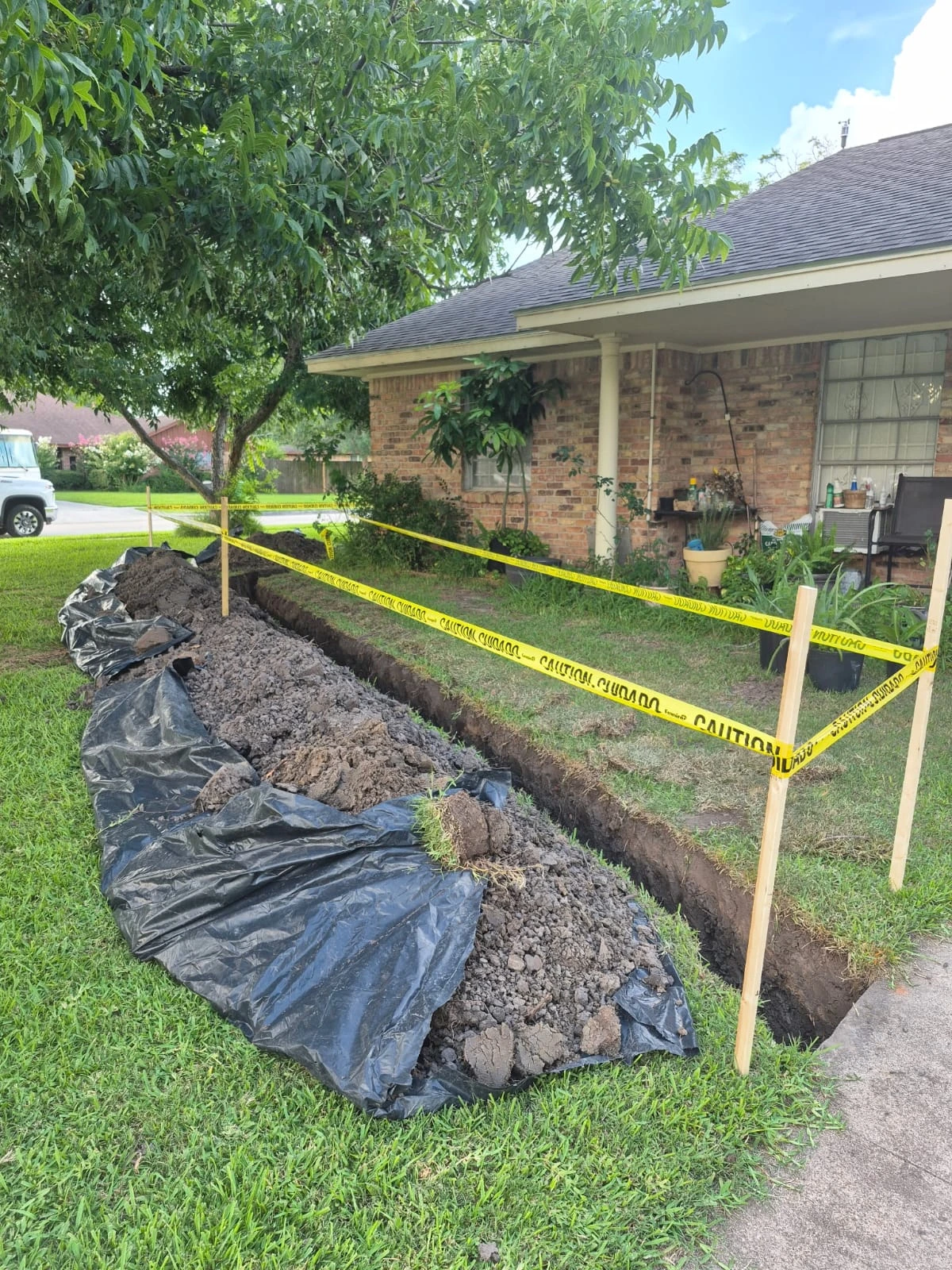
Experienced contractors use specific techniques to minimize disruption. For instance, we place excavated soil on protective tarps to keep your grass clean and may use tunneling to avoid digging up driveways or landscaping. Our goal is to provide a “clean” job site while accessing the critical plumbing lines needing repair.
Houston Permits, Costs, and Planning
Do I need a permit for trenching in Houston?
Yes, most projects involving public rights-of-way or primary utility lines require a Scheduled Excavation Permit from the City of Houston. These permits ensure the work meets local safety codes and are typically valid for 60 days. Our team handles the entire application process and coordinates with city inspectors to ensure project compliance.
How much does under-slab tunneling cost in Houston?
In 2026, the average cost for under-slab tunneling in Houston ranges from $250 to $450 per linear foot. A typical bathroom repair requiring 10 feet of tunneling may cost between $4,000 and $7,500. Factors affecting the final price include Houston’s soil stability, the depth of the lines, and restoration requirements like mud-pumping.
How does Houston’s weather and soil impact my project?
Houston’s heavy rainfall and high groundwater levels require ground support systems to be installed during excavation. Saturated clay soil can become unstable, potentially delaying projects or requiring extra safety precautions like shoring. We monitor local weather patterns closely to ensure soil stability and job site safety for every Houston project.